


A Note From the Redbud VC Team
New month, new trillionaire. SpaceX pulled off the largest IPO in history, then used its new shares to buy Cursor for $60 billion. Anthropic filed to go public at a ~$965B valuation. Kevin Warsh ran his first Fed meeting, held rates, and put a rate hike back on the table. Meta is maybe launching a prediction market? And the U.S. and Iran signed a deal to wind down their war, dropping oil below its pre-war price. If you've got a resilient team building something unique, pitch it here.
Redbud VC invests $250k-$500k in early-stage tech founders. We bring monthly updates on Redbud, tech, and economics. - We've filtered thousands of sources for our 16k readers, so you don't have to. Enjoy 🥂
Is the infamous Anthropic investor making a comeback??
🔥 Burning Question of the Month
Should we be rooting for the crash of the VC asset class?
📈 Macro Trend Report
IPO WATCH | The IPO window cracked open in slow motion this spring. SpaceX filed its public S-1 on May 20, and the frontier labs read it as the green light. Anthropic filed June 1, on the back of its $965B May round. OpenAI filed confidentially June 8, one week behind Anthropic and about three weeks behind SpaceX's S-1, then announced its own filing in a blog post, deadpanning that it expected it to leak "so we're just announcing it." Both labs beat SpaceX's own debut to the SEC. On June 12, SpaceX priced at $135, raised $75 billion, and debuted on Nasdaq under SPCX at a $1.77 trillion valuation, the largest IPO in history by a wide margin. That dwarfed Saudi Aramco's $29.4B in 2019. The stock opened at $150, closed the first day up 19%, and cleared $2 trillion within days, passing Microsoft and Amazon before it peaked at $225.64 intraday on June 16 and cooled back toward $153 by month-end. Musk's stake of roughly $866.5 billion pushed him over the line as the world's first trillionaire. But SpaceX's slide from $225 to $153 is the first sign the window isn't wide open. For now, the market is still risk-on.
ECONOMY | Kevin Warsh ran his first FOMC meeting on June 17, and the committee held the funds rate at 3.50%-3.75% for a fourth straight meeting, unanimous 12-0. The median 2026 dot rose to 3.8%, flipping March's implied cut into an implied hike, and 17 of 18 officials now see inflation risks tilted to the upside. The Fed revised headline PCE up to 3.6% (from 2.7% in March), nudged core to 3.3%, and trimmed GDP to 2.2%. Hiring held up, with May payrolls at +172,000 and unemployment steady at 4.3%, which removes the Fed's excuse to ease. Warsh also rewired how the Fed communicates on day one: he dropped forward guidance, declined to submit his own dot stating, "It's not helpful in the conduct of policy", and stood up five task forces to overhaul Fed operations. The whole hawkish case rested on energy, and the timing was strange. Warsh's turn landed on June 17, the same day Trump signed a memorandum of understanding to wind down the Iran war. A week later, oil dropped almost 5% in a single day. The new chair is signaling hikes even as cheaper oil points the other way.
ENERGY | On June 17, Trump and Iranian president Masoud Pezeshkian signed an MOU to end the war and the Strait of Hormuz blockade, followed by a renewed Israel-Hezbollah ceasefire on June 19. It wasn't clean. Israel kept striking southern Lebanon, Iran claimed it re-closed the strait, and the US Navy answered on June 27 by opening a widened shipping lane near Oman to challenge Iran's grip. Oil markets moved fast: on June 24, WTI fell below $70 for the first time since the war began, and Brent slid to $73.50, under its pre-war level, as Hormuz tanker traffic started to normalize. For scale, Brent had peaked near $120 in late April, the steepest wartime oil rally in more than three decades. Qatar, which supplies about a fifth of global LNG, said it will restart pre-war production within weeks, and the U.S. reopened its Kuwait embassy after a three-month closure. But analysts think Iran keeps effective deterrence over Hormuz no matter what the paper says, and any reopening stays partial given the damage to Gulf refineries and pipelines. The oil shock was the single biggest force keeping inflation hot and the Fed boxed in, so crude back below pre-war levels relieves the pressure behind Warsh's hawkish turn and lowers the power bill for the AI buildout everyone is racing to finance.
NUCLEAR | Helion became the first company to secure the licenses needed to operate a fusion power plant, clearing radioactive-materials and air-emissions permits from Washington State for Orion, its plant under construction in Malaga. General Fusion's roughly $1 billion SPAC merger with Spring Valley cleared SEC review, with a July 6 shareholder vote that would put one of the few listed fusion companies on the Nasdaq. Inertia, fresh off a $450M Series A, loaded its advisory board with national-lab heavyweights, and Type One Energy added former bp CEO Bernard Looney to its board as it closes a Series B and targets grid power by 2034. The Department of Energy even tapped General Atomics to design its first full-scale "blanket" test facility, one of the last engineering gaps between experiments and real plants. ⚛️
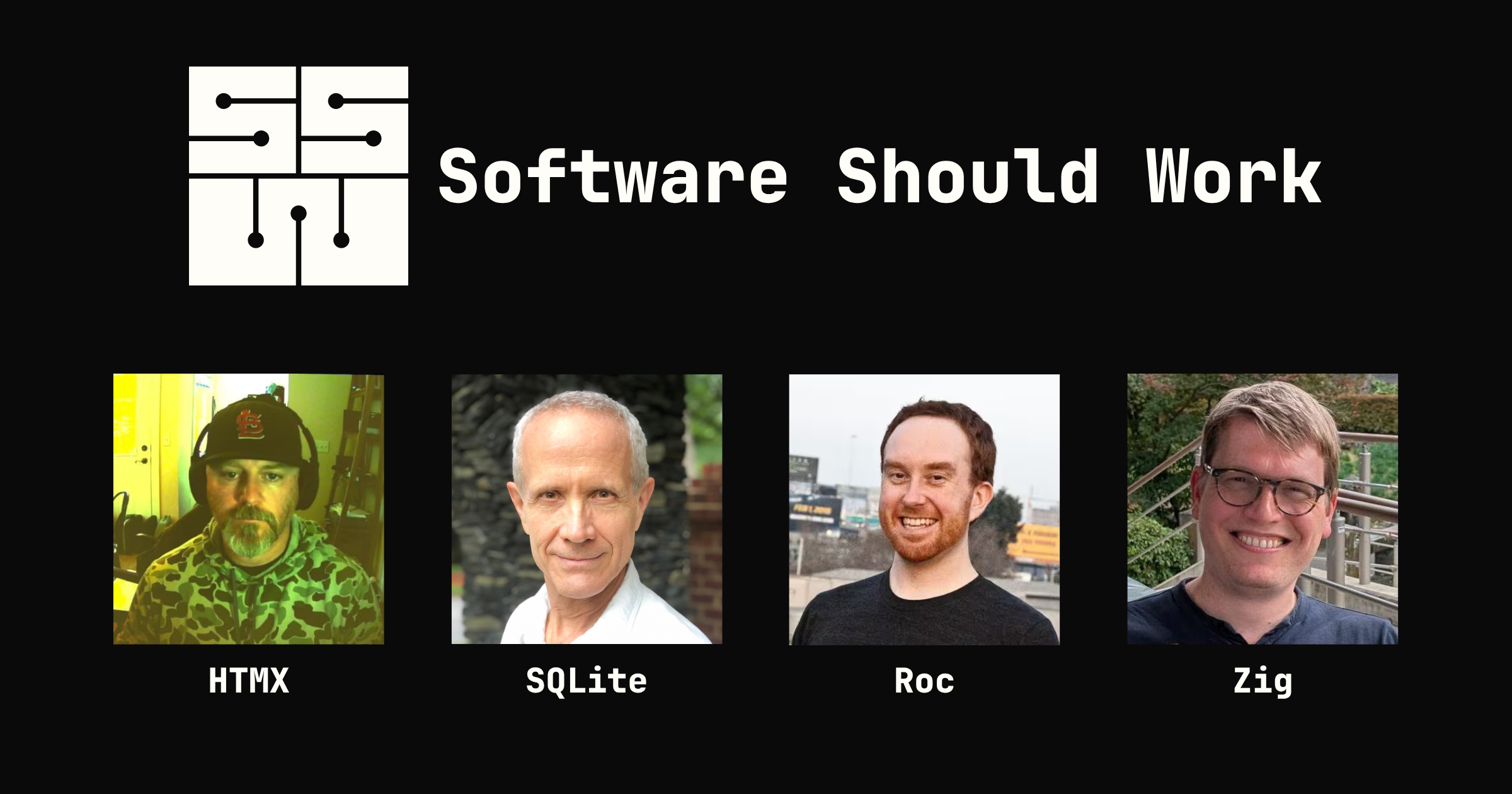
💻Software Should Work
Here’s a reminder to join us at Software Should Work, a conference on software reliability, held here in Columbia on July 16-17. The conference features some very excellent engineers!
📈 Micro Trend Report
WELCOME BACK FABLE | On June 9, Anthropic shipped Mythos 5 through the restricted Project Glasswing program, and Fable 5, the first time it put a model this capable in front of the public, wrapped in new safeguards that route high-risk queries to Opus 4.8. Friday, June 12 at 5:21pm ET, the Commerce Department handed Anthropic an export-control directive citing national security and ordered it to cut off both models for any foreign national, including its own foreign-national employees. Since you can't verify nationality at the API layer, Anthropic pulled Fable 5 and Mythos 5 for everyone, worldwide. The government's stated concern was a method to "jailbreak" Fable's cybersecurity guardrails, reportedly flagged to the White House by Amazon CEO Andy Jassy. Anthropic pushed back hard. It says the demonstrated technique surfaced only minor, already-known bugs that public models like GPT-5.5 find too, and that recalling a model over a narrow jailbreak would "essentially halt all new model deployments" across the industry. The models stayed dark for 18 days while Anthropic negotiated in Washington, with co-founder Tom Brown reportedly leading the talks after the administration soured on Dario Amodei over his AI-safety views and 2024 politics. A federal judge called the order "Orwellian" and an attempt to cripple the company, and the government is appealing. On June 30, Commerce withdrew the directive and restored access, saying the diversion risk no longer justified the controls, though nobody will say what changed. 🔌
THE BASE CAMP CAPITAL | The World Cup reached the heartland, and the smallest of the 11 U.S. host cities won the race no one was watching: the base camps. Four national teams picked the Kansas City region as their base camp, the training site and hotel where a squad lives for the whole tournament instead of hopping from city to city: Argentina, England, the Netherlands, and Algeria. That makes KC one of only two host cities with four camps, and the only one housing three Pot 1 teams. The defending champions landed on Sporting KC's facility after scouting Dallas and long being rumored for Messi's Miami; England took Swope Soccer Village despite not playing a single match in town; the Dutch booked the Kansas City Current's new center. A base camp is six weeks of hotel blocks, catering, security details, and broadcast crews, plus the fans who trail their team and stay. KC2026 projects 650,000 visitors and north of $653 million in direct impact, plus a free 18-day FIFA Fan Festival at the National WWI Museum and six matches at Arrowhead capped by a July 11 quarterfinal. Visit KC trained hotel and restaurant staff and flew delegations to the Netherlands and Argentina, and a Kansas butcher started cutting halal meat for Algeria's chef. This is set to be the biggest event in the history of the 511,000-person city. ⚽
SPACEX ACQUIRES CURSOR | Four days after going public, SpaceX exercised an April option to buy Cursor-maker Anysphere for $60 billion in all stock, the largest acquisition of a venture-backed startup on record. The funding is the interesting part. SpaceX's stock appreciated by more than the entire cost of Cursor in its first few hours of trading, so a four-day-old public company bought the category leader in AI coding without touching cash, debt, or IPO proceeds. Musk's dual-class structure removed any board friction. SpaceX needed an AI multiple to justify a $28.5 trillion addressable-market pitch, and Cursor (roughly $2.6B in enterprise ARR) was the fastest way to buy one. However, Cursor's market share slid from 41% to 26% over the past year as Anthropic's Claude Code took half the category, and Cursor still routes traffic through Claude and GPT. The deal should close in Q3, antitrust regulators permitting.
DATA CENTER EXPANSION | This month, Amazon committed $10 billion to a data center campus in Montgomery County, Missouri, bundled with new roads, a bridge over the Norfolk Southern rail line, and a water system it will hand to the local utility, plus more than $7 million in community spending that even covers sponsoring the county fair. Amazon agreed to bear the full cost of connecting to the grid through Ameren Missouri, a direct answer to the backlash building elsewhere, where Ohio just suspended a data-center tax break while residents push to ban new builds. Developers are now paying for their own power, water, and roads to clear local opposition to data centers.
WHAT WE’RE READING
WHAT WE’RE LISTENING TO
MAFIA EP 001 [0.5 hr]
Midjourney Goes Medical [0.5 hr]
WHAT WE’RE DOING
July 9th, a Roots Happy Hour in Atlanta with top fintech talent, co-hosted with our founders at Transend.
July 17th, a Roots Happy Hour in Columbia, MO, with leading operators and technical talent.
July 27th, a Roots Happy Hour in Chicago with leading operators from legacy industries, co-hosted with SNAK and Paul Hastings.
THIS MONTH’S EVENTS
Attended the Great Lakes Venture Capital Summit in Michigan, getting the chance to connect with over 50 top VCs in the region. 🐟

🚀 Non-hub Deals
Here are the rounds for May!
Check out the 189 non-hub deals we tracked for over $3.1B in funding here; deal counts continued to fall, but round sizes jumped dramatically this month. This continues the trend of increasing individual round sizes over the past few months.
Atlanta-based Askari Defense closed a $9M Seed
Aton Health wrapped a Series A, based in Kansas City
Arpio, a North Carolina-based company, closed a $15M Series A
Utah-based Redo raised an $81M Series B
Chicago-based startups closed a few rounds this month
SyntaxBio closed a $14M Series A
Honeycomb closed a $40M Round
Across Texas
Ollin Bio closed a $330M Series B
Circuit raised a $30M Series A
Mantle Energy closed a $5M Seed
🌳 Redbud Highlight
We invested in RouteSense’s $2M pre-seed!
RouteSense brings real-time intelligence to the payments stack through a routing platform that monitors the health of every merchant ID across a company's processors and scores each one with its proprietary MIDAS system, replacing the stale monthly reports and static rules that continue to hurt at-risk MIDs.
Thrilled to partner with Stephen and Colin Martin and Robert Matthews as they build the intelligence layer for the world's payment infrastructure. Read about the team and product below. ⤵️
FOUNDER PLAYBOOK
The Residency
Building in SF just got easier with the residency — access to premier housing, chef-made meals, and a community of generational builders.
PIQUED OUR INTEREST
The most interesting tweets, charts, and content from the month
Until next time,
Redbud VC
This newsletter is for informational and educational purposes only and should not be considered investment advice. The authors and publishers are not licensed financial advisors.